HOW TO READ YOUR WHOOP DATA LIKE AN OLYMPIC COACH: A PRACTICAL GUIDE FOR BUSY LEADERS
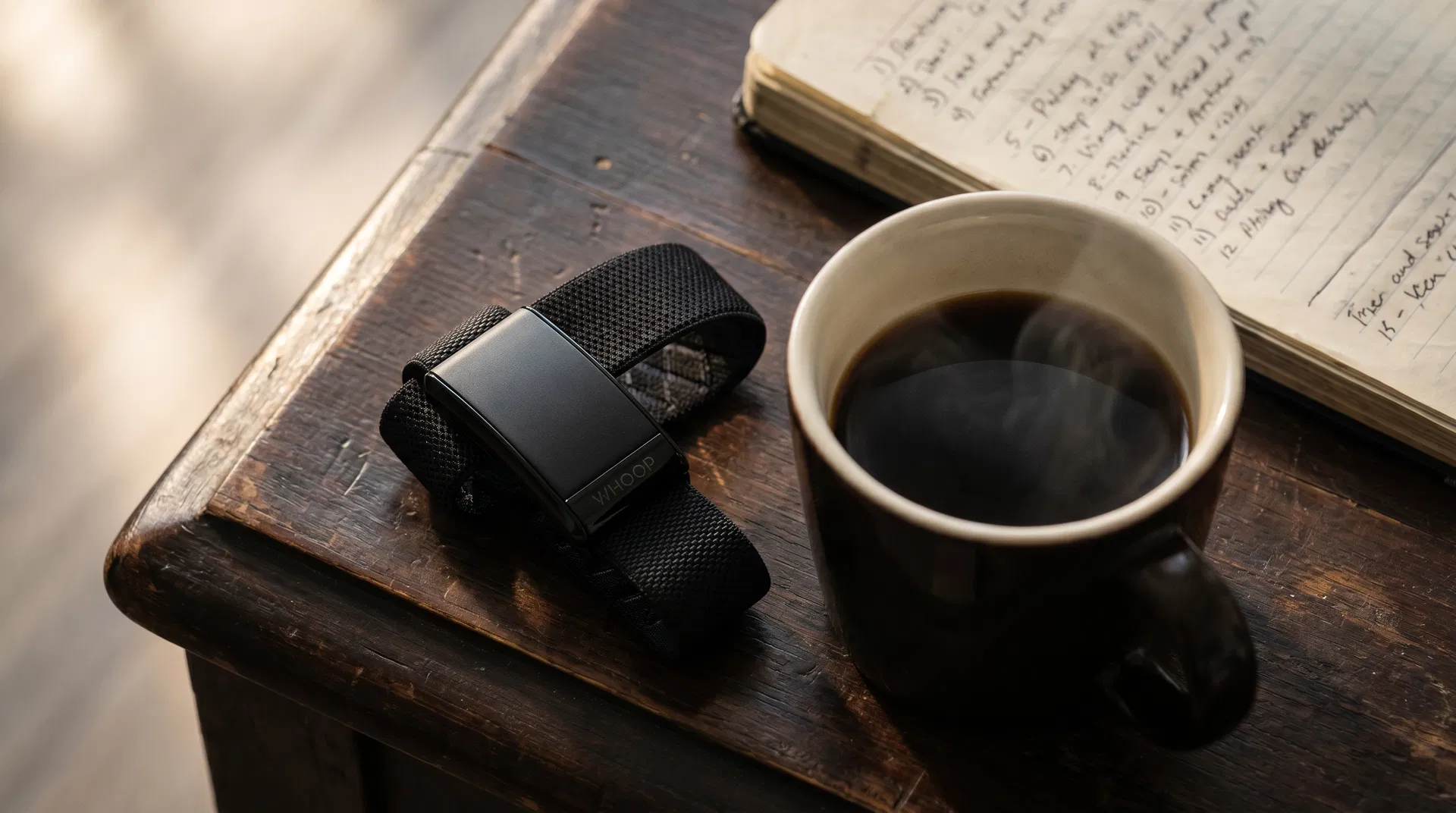
You have a WHOOP on your wrist. You check your Recovery score each morning. You know that green is good and red is bad. But if you are being honest, you are probably not using the data to make meaningfully different decisions about your day. You train when you planned to train, sleep when you can, and hope the numbers improve over time.
This is the gap between wearing a wearable and actually using one. At Otion, we use WHOOP data as a core input for programming decisions with both our Olympic athletes and our executive clients. The device is the same. The difference is in how the data is interpreted and applied. This guide will teach you to read your WHOOP data the way an Olympic coach does, and more importantly, to translate that data into specific, actionable decisions.
THE FOUR METRICS THAT MATTER
WHOOP tracks dozens of data points, but for practical decision making, four metrics provide the vast majority of actionable information.
1. Recovery Score (0 to 100%)
Your Recovery score is WHOOP's composite metric that integrates your heart rate variability, resting heart rate, respiratory rate, and sleep performance into a single readiness indicator. It is colour coded: green (67 to 100%) indicates your body is well recovered and ready for high strain, yellow (34 to 66%) indicates partial recovery where moderate activity is appropriate, and red (0 to 33%) signals that your body is under significant stress and needs prioritised recovery.
What most people get wrong is treating the Recovery score as binary: green means go, red means stop. An Olympic coach reads it with more nuance. A green score after a genuinely restorative night of sleep is a signal to push hard. A green score after a night of alcohol consumption may be artificially inflated and should be interpreted cautiously. Context always matters.
2. Heart Rate Variability (HRV)
HRV is the variation in time between consecutive heartbeats, measured in milliseconds. It is the single most sensitive biomarker of autonomic nervous system function. A higher HRV relative to your personal baseline indicates a well recovered, adaptable nervous system. A lower HRV indicates accumulated stress and incomplete recovery.
WHOOP measures HRV during the final slow wave sleep period of the night, which provides the most accurate resting measurement. The key principle is that HRV is highly individual. A 30 year old endurance athlete might have a baseline HRV of 80 to 120 milliseconds, while a 50 year old executive might have a baseline of 25 to 50 milliseconds. Both can be perfectly healthy. What matters is your personal trend, not a comparison to anyone else.
3. Resting Heart Rate (RHR)
Your resting heart rate is the number of times your heart beats per minute during your deepest sleep. A lower RHR generally indicates better cardiovascular fitness and recovery. A sudden increase in RHR above your baseline, even by 3 to 5 beats per minute, is a reliable early warning signal of illness, accumulated fatigue, or excessive stress.
RHR and HRV typically move in opposite directions. When HRV drops, RHR tends to rise, and vice versa. Seeing both metrics move in the wrong direction simultaneously (HRV down, RHR up) is a strong signal that your body needs recovery.
4. Sleep Performance
WHOOP breaks sleep into four categories: time in bed, total sleep time, sleep efficiency (the percentage of time in bed actually spent asleep), and time spent in each sleep stage (light, deep/slow wave, and REM). For performance purposes, the two most critical sleep metrics are time in deep sleep and time in REM sleep.
Deep sleep is the physically restorative phase where growth hormone is released, tissues are repaired, and the immune system is strengthened. REM sleep is the cognitively restorative phase where memory is consolidated, emotions are processed, and creative problem solving occurs. An Olympic coach looks at these two metrics specifically because they determine the quality of recovery, not just the quantity.
THE DECISION FRAMEWORK: WHAT TO DO WITH THE DATA
Knowing the metrics is one thing. Knowing what to do with them is another. Here is the exact decision framework we use at Otion.
Green Recovery (67 to 100%) with HRV Above Baseline
This is your signal to push. Schedule your hardest training session, your most demanding meetings, and your most complex decision making for these days. Your nervous system is primed for high performance. Specific actions include performing your heaviest strength training sets, tackling your most cognitively demanding work in the first four hours of the day, and using this day for important negotiations or presentations.
Yellow Recovery (34 to 66%) with HRV Near Baseline
This is a moderate day. You can train, but reduce the intensity. Focus on technique work, moderate loads, and avoid pushing to failure. Cognitively, this is a good day for steady state work rather than high stakes decisions. Specific actions include training at 65 to 75% of your planned intensity, focusing on administrative tasks and routine work, prioritising a strong sleep protocol that evening to recover for the next day, and considering a midday walk or light movement session.
Red Recovery (0 to 33%) with HRV Below Baseline
This is a recovery day. Your body is telling you that it has not recovered from recent stress, whether physical, cognitive, or emotional. Training hard on a red day digs you deeper into a recovery deficit. Specific actions include replacing any planned strength training with light mobility work, walking, or yoga, avoiding major decisions if possible, prioritising sleep above all else that evening, reviewing what caused the low recovery (late night, alcohol, travel, illness, accumulated stress) and addressing it.
The Trend Matters More Than Any Single Day
A single red day is not cause for alarm. Everyone has bad nights. What matters is the trend over seven to fourteen days. If your HRV is trending downward over two weeks, or your Recovery scores are consistently yellow or red, this is a signal that your overall load, training plus work plus travel plus life, is exceeding your recovery capacity. This is when a de-load week or a strategic reduction in professional commitments becomes necessary.
READING SLEEP DATA LIKE A COACH
Beyond the Recovery score, WHOOP's sleep data provides specific, actionable insights.
If your deep sleep percentage is consistently below 15% of total sleep time, this suggests your physical recovery is compromised. Common causes include late evening exercise, alcohol consumption (even one or two drinks significantly suppresses deep sleep), and an overly warm sleep environment. The intervention is to address these specific disruptors.
If your REM sleep percentage is consistently below 20% of total sleep time, your cognitive recovery is compromised. Common causes include caffeine consumed too late in the day (caffeine has a half life of five to six hours), high stress levels, and inconsistent sleep timing. The intervention is to enforce a hard caffeine cutoff before 10am and establish a consistent wind down routine.
If your sleep efficiency is below 85%, you are spending too much time in bed awake. This often indicates that you are going to bed before you are actually sleepy, using screens in bed, or experiencing anxiety that prevents sleep onset. The intervention is to delay your bedtime until you feel genuinely sleepy and remove all screens from the bedroom.
STRAIN: UNDERSTANDING YOUR DAILY LOAD
WHOOP's Strain score quantifies the cardiovascular load of your day on a scale of 0 to 21. This includes both exercise and non exercise activity. For executives, understanding strain is important because it reveals the total physiological cost of your day, not just your workout.
A typical office day might generate a strain of 6 to 10. A day with a hard training session might push strain to 14 to 18. A day of international travel can generate surprisingly high strain due to the physiological stress of flying, disrupted sleep, and time zone changes.
The key insight is to match your strain to your recovery. On green recovery days, you can handle higher strain. On red days, keep strain low. Over time, the goal is to see your body's capacity to handle strain increase, which is a direct indicator of improving fitness and resilience.
FREQUENTLY ASKED QUESTIONS
What is a good HRV score on WHOOP?
There is no universal "good" HRV. What matters is your personal baseline and trend. A consistent upward trend in your seven day HRV average indicates improving health and recovery capacity. A downward trend signals accumulated stress.
How accurate is WHOOP compared to clinical devices?
WHOOP has been validated in multiple peer reviewed studies and shows strong correlation with clinical grade heart rate and HRV monitors. It is not a medical device, but for tracking trends and making training decisions, it provides sufficient accuracy for practical use.
Should I train on a red recovery day?
Generally, no. Replace hard training with light movement, mobility work, or walking. Training hard on a red day delays recovery and increases injury risk. The exception is if you know the red score was caused by a one time event (a late night out, for example) and you feel subjectively well.
How long does it take for WHOOP to calibrate to my body?
WHOOP needs approximately two to four weeks of consistent wear to establish your personal baselines for HRV, RHR, and sleep metrics. During this calibration period, focus on wearing the device consistently and building a data history rather than reacting to individual daily scores.
Can I use Oura Ring instead of WHOOP?
Yes. Oura Ring provides similar metrics including HRV, RHR, and sleep staging. The principles in this guide apply equally to Oura data. At Otion, we work with clients using either device and apply the same decision framework regardless of the hardware.
At Otion, we review our clients' WHOOP data daily and use it to make real time adjustments to their training and recovery protocols. If you want to stop just wearing your wearable and start actually using it, join the Otion waitlist.
■ READY TO PERFORM?
JOIN THE WAITLIST
Be the first to access Otion's Olympic-level performance coaching for founders, CEOs, and executives.
GET EARLY ACCESS